
Praying with Eyes Closed or Open?
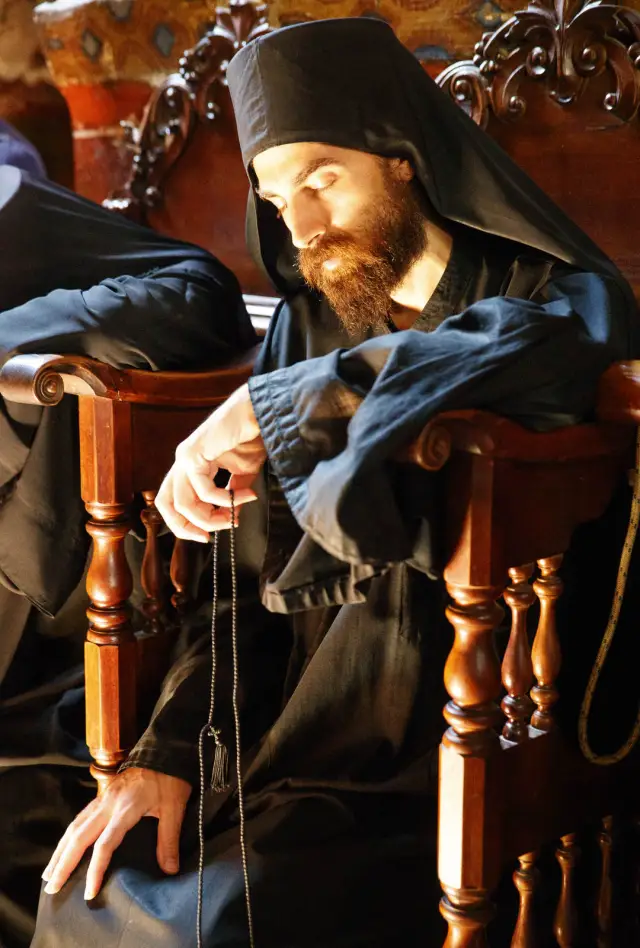 The Orthodox has many rules and directives for priests. One that I frequently violated was serving the Divine Liturgy from memory and not reading from the service book. The sacred services of the Church are quite beautiful and deeply rooted in Scripture as well as the writings of the Holy Fathers. The words and symbolic gestures used in the Divine Liturgy in particular recall for us the life of Christ and his salvific work for those who believe in Him. From the prothesis (proskomedia or offering preparation) which embodies the place (the cave) and time (Christmas) of the birth of Christ, through the Lord’s ascension and His promise to return represented by the blessing the faithful with the chalice after receiving the Eucharist – we are invited to participate in the truth that is Jesus Christ and the beauty that is the Orthodox Church. (more…)
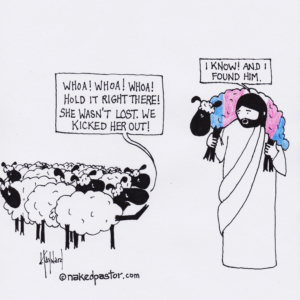 One of the things that good teachers know is that there is no such thing as a stupid or wrong question from their students. To suggest to a student otherwise is to immediately shut down the possibility of further learning by the student. Every teacher has encountered numerous instances in class when a student raises their hand and begins with one of these phrases “I know this is a stupid question… OR… I am probably wrong but…” It takes a lot of courage for many students to raise their hand, risking judgment by their teacher as well as their peers, to ask a question that might be perceived by others as a stupid one or the wrong one. To dismiss that student’s question is the complete opposite of what teaching is all about. The Socratic method of teaching, based on asking and answering questions, promotes critical thinking and draws out new ways of thinking and understanding.
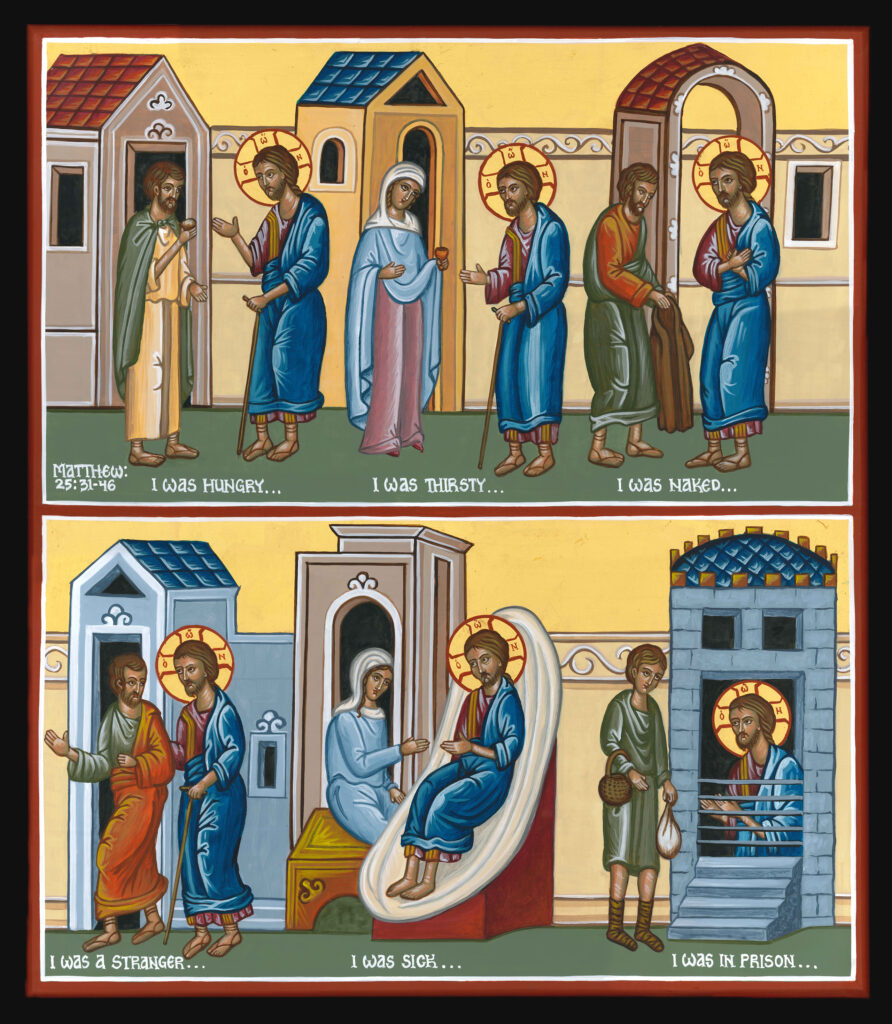 In preparation to be ordained a priest, I spent four years studying in a seminary. They were some of my life’s best, yet most challenging years. I met those who would become lifelong friends. During those years I tested and questioned myself more than almost any other time in my life. While discerning a calling to the priesthood is demanding, it is even more so for a gay man. I knew that a calling to serve God in His Church was a blessing, I just had to figure out what that meant exactly and how to carry my calling out. In other words, it was a considerable mystery to me. It was a blessing that was also a mystery.
  In high school, I had only one good, best friend. The reason for this was probably the way I saw myself and the fact that I frequently tried to hide, not wanting to call attention to myself. When you were a fat, gay teenage boy, in the late 1970s living in the suburbs there were not many opportunities to be proud of who you were. Of course, I knew that my parents loved me, although my father constantly commented on my weight, but it was not the same as having a true friend, one in whom I could confide, sharing my thoughts and dreams. Finally, late in my junior year, I told my best friend that I was gay. Although not attracted to him at all, I did hope that there was a slight possibility, that he was gay as well. The reaction that I got from him was utterly devastating. He told me that homosexuals were horrible people, and then he threatened to tell my parents my deepest secret, which I thought would be safe with my best friend. I was instantly terrified. The idea of my parents finding out my secret was devastating to me.
 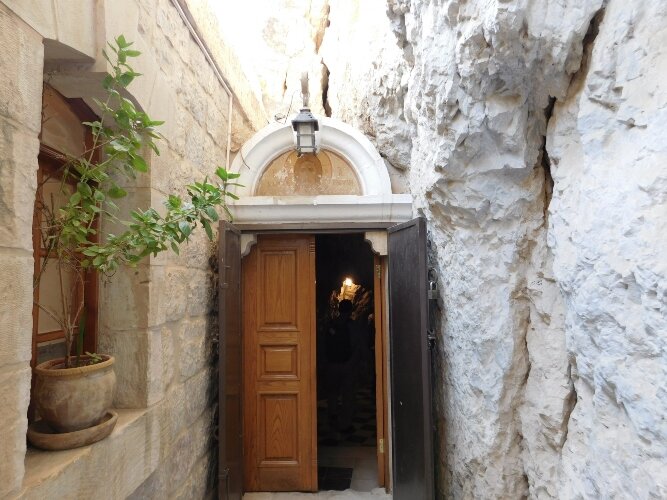 Before I was ordained a priest, I wanted to make certain that the Orthodox Church, and in particular, the Ukrainian Orthodox Church, in which I was raised, was the right place for me to carry out my calling to the ordained ministry. Chicago, my home and where I was living at the time while in graduate school, is a wonderful city, replete with numerous ethnic communities that boast a plethora of religious communities. For almost one year I was privileged to visit numerous churches and temples and witness the religious services of prayerful worshippers. For me, I was quite sure that I wanted to be part of Christ’s family, and so it was early in my search that I decided that a non-Christian group was not for me.
  My father and I had what can only be described as an up and down relationship. My father was immensely proud of the fact that I was a priest and earned a Ph.D. and was able to teach in Seminary, educating future leaders of the Ukrainian Orthodox Church. And yet what worried him constantly, and even embarrassed him, was my life-long struggle with weight. For as long as I can remember I wanted to be a priest and for as long as I can remember I have struggled with weight issues. Although I never questioned my father’s joy and happiness with my pastoral achievements, I did have a life-long question: “Would my father love me more if I were not overweight? Not far from that question, was another disconcerting and constant question: “Would my father still love me, if he knew I was gay?”
  2020 has been a devastating year. Covid-19 has caused immeasurable harm, taking the lives of millions of people, creating unprecedented long-term illnesses, and is responsible for significant shifts in our emotional and mental states, not to mention uprooting our daily routines in life. To be sure it has also taken a toll on our spiritual lives. Many civic jurisdictions around the world have prohibited or limited our ability to gather for community worship, sing at divine services, and even caused significant, sometimes disconcerting discussion on how Holy Communion is to be administered.
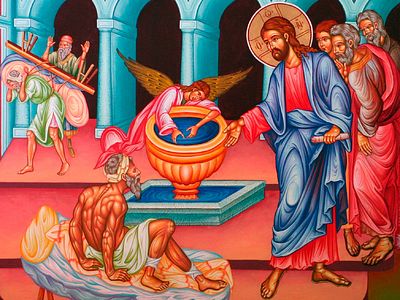 The Gospel passage about the paralytic being healed at the Pool of Bethesda has always perplexed me. (John Chapter 5). A quick reading of this passage would indicate that there is a connection between sinning and disease or prolonged illness. As someone who witnessed the debilitating illness of Alzheimer’s that my mother suffered with for over a decade, I find it unfathomable to believe that there was causation between her sinfulness and her long infirmity. She was robbed of memories and speech, recognition of loved ones and, basic human dignity.