What is the Cost of Lies?
What is the Cost of Lives?
July 8, 2020
On Saturday, April 26, 1986, Lazarus Saturday was observed in the Orthodox Church. The commemoration of the raising of Lazarus (John 11) is celebrated on the day before Palm Sunday, viewed theologically as a prequel to the resurrection of Christ, eight days later. On that same day, in Ukraine, instead of celebration, there was disaster, as a nuclear reactor exploded in Chornobyl (in Russian, Chernobyl). The catastrophe is viewed as the worst nuclear disaster in human history, with an unknown number of deaths, physical tragedy, and life-long consequences. (more…)
 A few years ago my husband and I were at a social gathering when someone commented to me that they thought things were getting better for gay people. I was a bit stunned by his comment, not knowing if to pity him for his ignorance or admire his “the glass is half full” optimism. I have always been a “justice delayed is justice denied” kind of guy, but I am also a realist, understanding that societal and government changes do not happen as rapidly as some of us would like. At the time he made the remark, I was still unable to marry my “partner” after more than a decade of living together. LGBT individuals in this country could and can still be denied employment and housing based on their sexual orientation, and in other parts of the world gay people were, and are, publically debased and tortured with the sanction of state and religious authority. And yet in spite of all of this, the white, educated, heterosexual male at the social gathering believed he was right in saying to me “things are getting better.” This man knew of no ostracization from his family for wanting to marry someone of the opposite sex and raising a family, he never lost employment for being straight, he would never know ridicule in this or any other society in the world for being a heterosexual. These are realities that almost every LGBT person and couple has experienced even in the most enlightened of societies. From micro aggressions in an accepting workplace to unfathomable persecution,
 About six months ago my mother passed away. For those who have lost a parent, you know that the grieving process can take longer than expected. It certainly has taken me quite a while and I am still definitely in the process. There is a holy tradition in the Orthodox Church to commemorate the deceased during a church memorial service, three days, forty days, and one year after their death. These “milestones” are observed in order, according to Orthodox theology, to give rest to the soul of the deceased. They also serve another important purpose and that is to give much needed solace to the family and friends whose loved one has passed.
 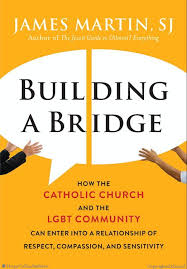 An Orthodox Christian reviews Building a Bridge – How the Catholic Church and the LGBT Community Can enter into a Relationship of Respect, Compassion, and Sensitivity by Father James Martin SJ.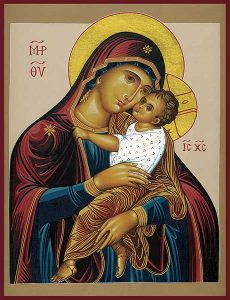
 r completing my PhD in history, I was asked by the jurisdiction to which I belonged, the Ukrainian Orthodox Church, to write a detailed history of the Ukrainian Church in the USA. A significant number of Ukrainians began arriving in the United States and Canada before World War I, many seeking economic advancement and stability in a new world. Several of these were temporary immigrants, fully intending to return to Ukraine to reunite with their families. The First World War changed that narrative for many. Small communities were created in several areas: the mining towns of Pennsylvania, the big cities of New York and Chicago that offered factory employment, as well as the rich farming lands of the Midwest. Naturally many of the first community centers that Ukrainians created in the new world were churches, where they could gather for divine services offered in a language and setting that was familiar and welcoming to them. From these significant numbers a Ukrainian Orthodox diocese was created, with several parishes.
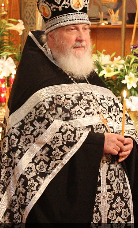 A very special priest died a few months ago. He was a priest who served as my spiritual father for many years. Archimandrite Athanasy, or simply Father “Ath” as many of his spiritual children called him, was a kind and gentle soul, who understood firsthand how difficult life can be, which made him a very compassionate person. Perhaps because he himself had a difficult life, full of illness and uncertainty, Father Athanasy understood the deep necessity for love, kindness, hope, joy and forgiveness in all people. He was a priest of the Russian Orthodox Church Abroad, and served in a few parishes in the US, Haiti as well as in the Russian convents in Jerusalem. He served in the most exalted of places, Jerusalem, and part of the forgotten world which is Haiti.
 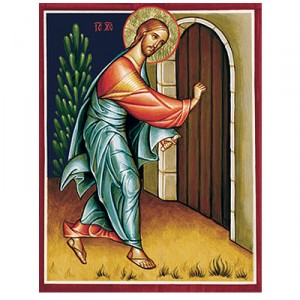 This week, I met with another local Orthodox priest.
 Christmas has always been a difficult holiday for me to celebrate. This is true for many gay and lesbian people. I grew up in a home with two different religious and ethnic traditions, including two different dates on when to celebrate Christmas. While my Ukrainian Orthodox father insisted on raising us in his faith, my English, Anglican raised mother, wanted to keep a few of her traditions alive in our home. There seemed to be a constant battle in our home over when and how to celebrate the Christmas holidays. For my father, far from his homeland of Ukraine, Christmas was to be celebrated on January 7, and came replete with age old traditions that were not always very well adopted by his American children, who were very much influenced by the madness that is found around December 25 in this country. My mother, also far from her family and homeland in England, wanted to celebrate the holiday on December 25. Going to a church where she could sing Christmas carols she grew up with, having a tree and a festive meal, were all part of the holiday celebrations.