
Do they know we are coming?
March 15, 2026
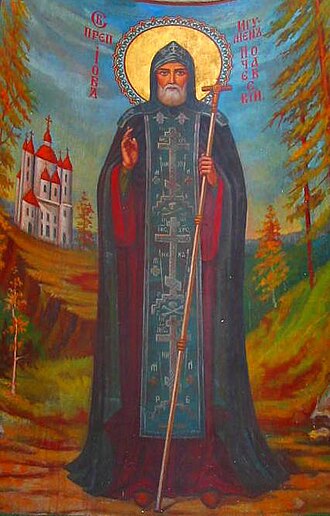
In 1991, just before the fall of the Soviet Union, I was asked by His Beatitude Metropolitan Mstyslav, of the Ukrainian Orthodox Church of the USA and Diaspora, to accompany him to Ukraine, as his secretary and assistant. His Beatitude had recently been elected to become Patriarch of the reconstituted Ukrainian Autocephalous Orthodox Church in Ukraine. Before the formal enthronement, which was held in the 10th-century St. Sophia Cathedral in Kyiv, His Beatitude visited numerous parishes all over Ukraine, which had either recently formed or those which changed their allegiance from the only permissible Orthodox Church in the Soviet Union, the Russian Church, to the renewed Ukrainian Autocephalous Orthodox Church. I was overcome with deep emotion at every stop to see what Ukrainians had prayed for was finally emerging. For over sixty years, they anticipated the resurrection of a Church that would serve not the interests of the Soviet state, but the Ukrainian people in their native language.
However, one incident on the trip saddened me greatly. His Beatitude had wished to pray in front of the relics of St. Job of Pochaiv at the Monastery of the Holy Dormition in Western Ukraine. As our car slowly arrived at the gates of the monastery, His Beatitude instructed me to walk to the entrance and say that “an elderly bishop, (he was 91 at the time) from the United States would like to venerate the relics of St. Job.” While I walked to the gates of the monastery, wearing a cassock and pectoral cross, the monk at the guard house at the entrance of the monastery looked me over and asked: “Does he have a permission document?” He asked me in Russian. I asked, in Ukrainian, “Does one need a document simply to pray at the tomb of a saint?” “Da!” (Yes!) I was told. Not having such a non-existent document, I walked away, quite saddened and shocked. In the car, His Beatitude told me that he was not surprised that he was not allowed to enter the monastery. After all the news was all over Ukraine, that the bishop who was ordained in Kyiv in 1942 was just elected as Patriarch[1] and was in the country visiting his flock. Such was the situation in Soviet Ukraine. Certain people could not be trusted in the church of Christ.
I was reminded of this incident recently. In February of this year, I was once again privileged to attend a retreat, part academic and part pastoral, for LGBTQIA+ Orthodox Christians and our allies and supporters, at Fordham University in New York City. On Sunday, following the conference, many of the attendees had plans to go to a local Orthodox Church for Divine Liturgy. As plans were announced to the participants, one person asked, “Do they know we are coming?”
This question of “do they know we are coming” has concerned me ever since I heard it. To put the question in context, some ten people raised their hands, indicating that they would be attending the Divine Liturgy the following day. Would ten extra people walking into a church be a threat, a concern, or even noticeable? I asked myself again, are certain people not to be trusted in the church of Christ?
This is the major plight that LGBTQIA Orthodox Christians face. How will I be viewed and received in the Church? I would remind all of us of the following:
-We are all made in the image of God: no matter our color, gender, sexual orientation, or any other distinguishing difference.
-We can no more change our God-given sexual orientation than I can change my height.
-We need to remind ourselves constantly that God loves us, even as the world might judge us.
-We need to know that while we are sinners, as all humans fall short of perfection, we are not sinners just because we are LGBTQIA.
-Finally, no one needs a permission document or has to pass some sort of purity test to enter a church in order to pray.
-Do they know we are coming? No, but Christ does. And that is all that matters!
[1] For some context, Mstyslav (Skrypnyk) was also the nephew of the last president of an independent Ukraine, at the end of WWI, Symon Petliura.