June 5, 2024
Hope! – Worthy of your attention
 Quite frequently this website receives emails from LGBTQ Orthodox as well as their family members and friends in and outside of the Church, asking if I see any hope or signs that the bishops were either open to or making any changes when it came to their usual harsh rhetoric towards gay people. As Christians, we are called to be a people of hope. We hope for the resurrection of the dead and life eternal in Christ. We hope in our daily lives to live a life that Christ has called us to live, one that loves others and does not judge before removing the log from our own eyes. (Matthew 7:5)
In this vein, I am always touched when I hear from those who are members of the Orthodox Church, and who are heterosexual, and voice their empathy and support for those of us who are LGBTQ and attempt to remain faithful members of Christ’s Church. There have been as of late supportive voices coming from the pastoral and scholarly worlds. Aside from academic works, the first few interviews are by a bishop and priests of the Church, expressing ideas rarely heard in the Orthodox Church. Also, Orthodox scholars in various fields of theology (biblical studies, patristics, church history, and ministry) have written articles and books, spoken at conferences, and in general, have been engaged in various corners of the Orthodox world on the topics of gender and sexuality. I would strongly encourage you to review the descriptions of the following interviews and books and consider reading the works in full to get a better understanding of some of the contemporary views of the Orthodox Church on the LGBTQ community, in particular those of us who are Orthodox Christians. (more…)

 The recent Olympics in Paris were quite a spectacle. From the unusual opening parade on the Seine River to the amazing story of US gymnast Simone Biles, the Olympics were an impressive competition to behold. Nevertheless, the event was not without its controversies. What struck me, in particular, was the storm surrounding the women’s boxing match and the boxer from Algeria.[1] For those not familiar with the controversy, Imane Khelif from Algeria, was not allowed to compete in the 2023 Women’s World Boxing Championships (WWBC) for failing two laboratory tests determining her sex. However, in 2024 the Olympic committee allowed Khelif to compete as a woman, stating that their criteria for determining sex differed from that of the WWBC.
 A good friend of mine passed away not too long ago. I should actually call him a former friend because when I left the active priesthood, no longer able to be alone in my life, this friend stopped communicating with me. He was so distraught that I left the priesthood, for a “homosexual lifestyle” that he stopped speaking with me. He was even further upset by my decision to marry the man that I love, and have now been with for over twenty years. Unfortunately, we never reconciled before his death. When finding out about my relationship, one of the questions he had about us, that he voiced to a mutual friend, was “Who is the wife? Someone has to be the wife!”
  The architectural layout of a traditional Orthodox Church is something that I have always loved. Usually, the conventional interior design of an Orthodox church has three main sections, the narthex or vestibule, the nave or main part of the church/temple, and the sanctuary or the altar area. While I imagine that most people do not think much about the vestibule or narthex section of a church, traditionally it is an essential part of the liturgical rites of the Orthodox Church. Those preparing for baptism, the catechumens were to remain in this area and were prohibited from entering the main part of the church. It was also the place penitents were relegated to stand during the Divine Liturgy until the end of their penitential period. Today, many of the divine services and mysteries of the Church, begin in the narthex. For example, baptisms, marriages, funerals, and certain Lenten and Holy Week ceremonies are called to start in the vestibule. Today, in many Orthodox Churches the vestibule is the place to purchase and light candles or find parish bulletins, but rarely is this area given much of a second thought by most Orthodox Christians. The important sections are usually seen as the nave or church proper as well as the sanctuary, behind the iconostasis or icon screen.
 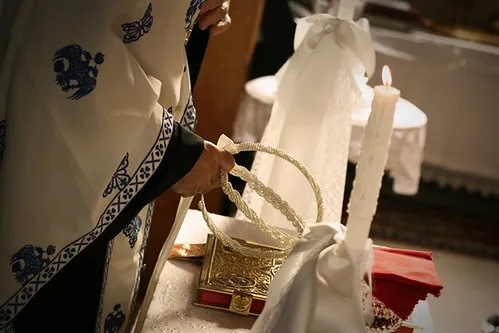 Four Weddings and a Funeral is a British movie, released in 1994, about the romantic adventures of Charles, played by Hugh Grant, and his lively group of friends as they support each other through a series of life events. Perhaps one of the most touching and memorable scenes takes place at the funeral of one of the friends, Gareth. It is revealed at the service that Gareth was not only gay but in a relationship with another member of the circle of friends, Matthew. In his eulogy, Matthew said “Gareth used to prefer funerals to weddings. He said it was easier to get enthusiastic about a ceremony one had an outside chance of eventually being involved in.”
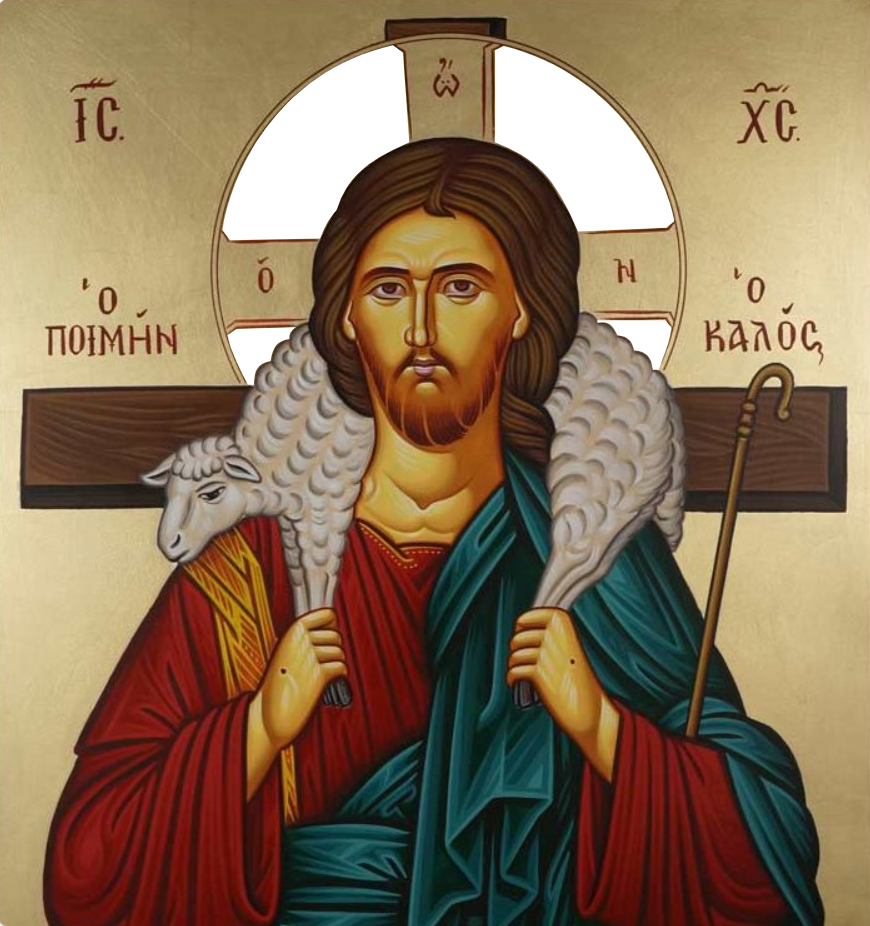 Watching a documentary recently about the detrimental and life-threatening struggles thousands of homeless children face, I was struck by the following words of one of the counselors: “Be the person you needed when you were younger.” The often-quoted words are believed to originate from Ayesha Siddiqi, an author and children’s advocate. The counselor made this impassioned plea to those who might be able to support the admirable work of helping homeless children. Those of us fortunate enough to live in relative peace and prosperity rarely think, for very long, about those considerably less fortunate than us. Understandably, we get caught up in our own world and may only take a few moments to think about or help those less privileged and in need. To be sure, those needing everything from a warm smile, a compassionate ear to a good meal, are all around us if we just took the time to look and think and act. When we act, listen or think only a portion of the time about others, we are not being the person that others need.
 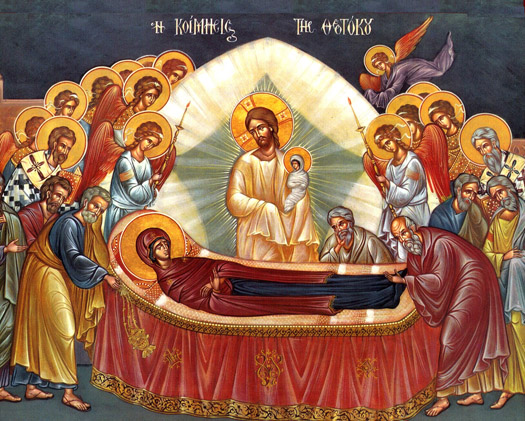 Through the generosity of the editors of “Orthodoxy in Dialogue,” we are pleased to re-post a wonderfully sincere and poignant piece entitled “A Gay’s Man Dormition Story”, published on their website on August 15, 2023, by an anonymous source. Please read the full article by following the link to “Orthodoxy in Dialogue” below, following the first paragraph of the work.
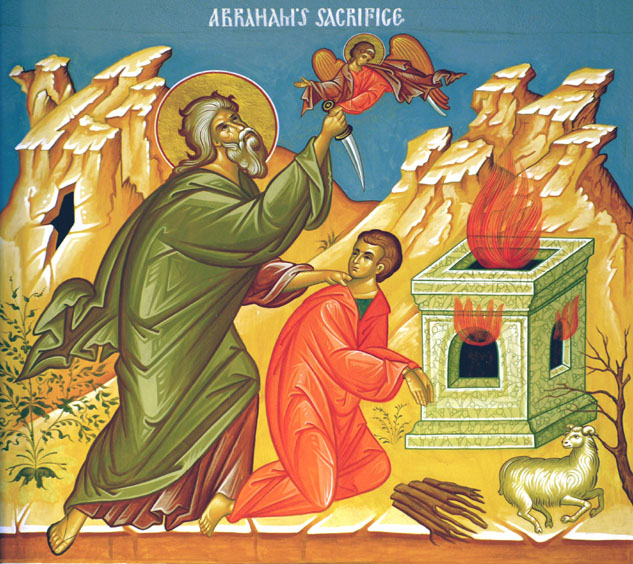 Seminarians, those preparing for the priesthood, frequently speak of having a “calling” to sacred orders. When I was in Seminary, the students often shared the moment, event, or path that led them to the desire to become a priest. Some stories were somewhat dramatic and could be tied to a specific time, others described a process, at times a lengthy one, culminating in them applying to Seminary. Each story was uniquely different and quite personal to each person. And even after years of arduous study, numerous liturgical services, private prayer hours, and participating in hours of conversations with those who would become lifelong friends, some concluded that they were not called to the priesthood. At the culmination of years at the Seminary, some were ordained, and others were never ordained. Each seminarian heard a different voice, a different calling from God, not only to enter Seminary, and “test” their vocation, but also discern when it was time to ask for ordination from the bishops. The same God was speaking differently to each of us, and we each heard different things, and acted in different ways, based on what we heard.
 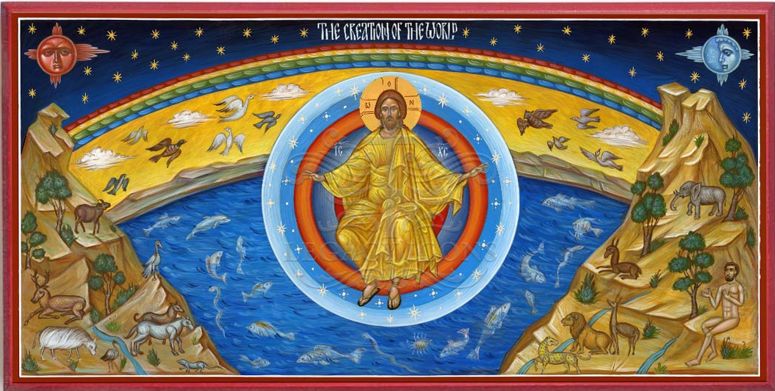 “Torch Song Trilogy,” written by Harvey Firestein in the 1970s, is a collection of three one-act plays in which the main character, Arnold Beckoff, wrestles with how to live his life, as a gay man, in a post-Stonewall New York City. Central to the plot of the story, later turned into a movie, are Arnold’s relationships with boyfriends, co-workers, his adopted son, and his mother. Arnold’s mother has a difficult time accepting her son’s homosexuality, and questions why he can’t just settle down and marry a “nice Jewish girl”. Arnold is frequently agitated and unhappy with his mother’s refusal to believe that he was “made this way”, in other words, made gay, by God. In one very funny scene, Mrs. Beckoff, “Ma”, in exasperation that her son thinks he knows more about his life than she does, states, “God, doesn’t know, my son knows.”